
How do you make and use garden compost?
Garden compost is broken-down plant waste, dark and crumbly, spread on the soil or lightly forked in: used as a mulch, the RHS gives a layer at least 5 cm thick. In the heap, 25 to 50 per cent of the volume is fresh green material, and the rest is chopped brown material such as prunings, straw, paper and cardboard.
By region
| North | Centre | South | |
|---|---|---|---|
| The heap | It slows in winter. Keep it in the shade, out of driving rain, and turn it when you can. | As in the north, with more warm weeks in which the heap is working. | Warmth speeds it up. If it is dry and fibrous, water it and add greens. |
| On the bed | Compost that is already mature, at least 5 cm if you are using it as a mulch, clear of the stems. On empty beds, when the soil is neither frozen nor sodden. | As in the north. | Between one crop and the next, only compost that is already ready. In summer keep it off the stems. |
A heap moves when it is balanced and aired. Warmth speeds it, cold slows it.
The RHS writes that composting is faster in warm weather and slows in winter, and that mature compost is dark brown, crumbly and smells of damp woodland. When to cover empty beds is in mulching. In December, on beds for spring, the job is in the December calendar.
Greens and browns
Greens, higher in nitrogen: clippings, annual weeds still green, crop waste, old fruit and vegetables, peelings. Browns, higher in carbon: shredded prunings and hedge trimmings, dead stems, straw, torn paper and cardboard. The RHS gives, as a rough guide, 25–50 per cent green and the rest brown. One material should not dominate, and grass on its own turns into a slimy mess that smells: mix it with brown, or hold it until you have enough brown.
Cut long branches and tear the paper, or they sit there whole. Lime and activators, the RHS writes, are unnecessary if the balance and the air are right: lime provides no benefit. Cooked food and dairy stay out: the RHS, in its schools guide, excludes them because they draw rats. The strained solids from nettle feed can go in.
The heap, and when it is ready
A sheltered spot, in part shade or shade, ideally on bare soil: soil life can get in and water can leave. On a hard base, add a few spadefuls of soil to start it. The bin keeps out rain, holds some warmth, drains and lets air in. Under 1 cubic metre it works more slowly, but it works. You can start in any month; spring is easier, when there is plenty of waste.
Turning adds air. The RHS does it several times a year, if you can: empty and refill, or go through it with a fork. Without that work, a balanced heap still matures, only more slowly. When turning, it suggests gloves and a dust mask, for risks it calls rare. If it is sodden and smells, cover it against rain and add brown. If it is dry and fibrous, water it in summer and add green.
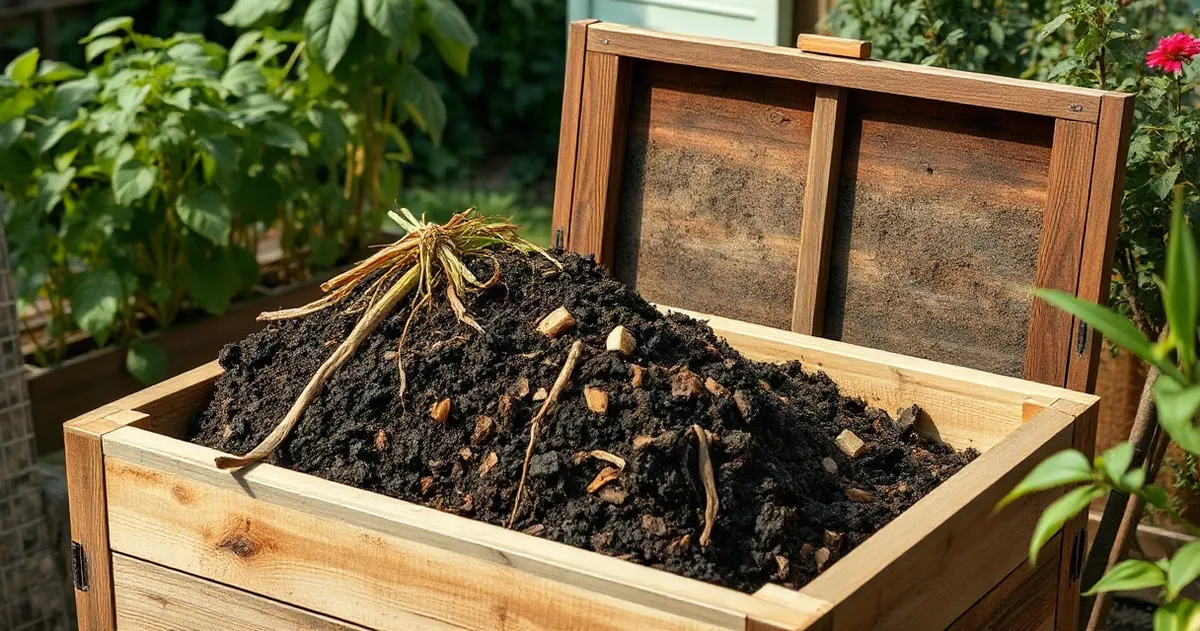
It takes from 6 months to 2 years. Ready compost is dark, crumbly and smells of damp woodland. Pieces still whole go back into the next heap. Spread it in a layer at least 5 cm thick, or fork it in lightly: it improves structure, air and water, holds moisture in sand and helps clay drain. In a raised bed the RHS uses it in the mix, not on its own, because on its own it slumps: that is in the raised bed guide. For sowing you need a seed compost, a different product: see the homemade seedbed.
What stays out
A home heap, the RHS writes, rarely gets hot enough to kill pathogens. It can take the less persistent leaf diseases, such as powdery mildews and rusts, especially if removed early: once the material has fully broken down they usually do not survive. Courgette powdery mildew is on that page: courgette powdery mildew.
Tomato late blight does not go in. The RHS says to bury the debris below cultivation depth, to put it in the council green waste, or to burn it where that can be done without troubling anyone. Clubroot and sclerotinia are not buried: they are soil-borne. The rule of thumb is under pests and diseases, and the tomato case is in late blight.
In the app
The app takes account of recent rainfall in your area and adjusts your watering reminder to match.
Frequently asked questions
How long does it take?
From 6 months to 2 years, the RHS writes. It is faster in warm weather and slows in winter. Turning, if you can, shortens it.
How do I know it is ready?
It is dark brown, crumbly, and smells of damp woodland. Pieces you can still recognise go back into the next heap.
Can I put diseased plants in?
Powdery mildews and rusts, removed early, usually do not survive once they have fully broken down. Tomato late blight, clubroot and sclerotinia stay off the home heap.
Can I sow in it?
No. Garden compost is a soil improver and a mulch. For sowing, use a seed compost, which is light and low in fertiliser.
It smells, or it is dry and stuck?
If it is sodden and smells, the RHS says to cover it against rain and add brown, including clippings only when they are mixed in. If it is dry and fibrous, water it and add green.