
How to recognise and prevent courgette powdery mildew?
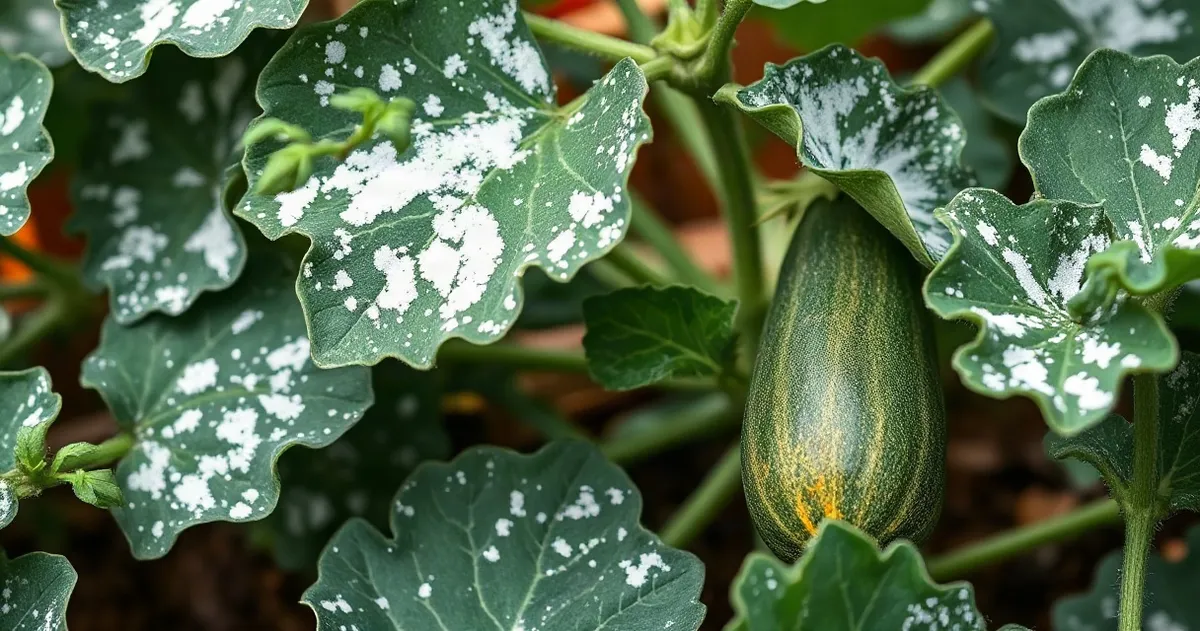
Courgette powdery mildew is the white dusty coating on the leaves, favoured by humid air around 68–81 °F (20–27 °C) and by plants that are thirsty, crowded or in shade. Limit it with resistant varieties, water at the base, air between the plants and by removing infected leaves: courgette fruit is not usually infected directly.
By region
| North | Centre | South | |
|---|---|---|---|
| When | More often in high summer, with warm days and humid nights. The season is shorter: take infected leaves off as soon as you see the dust. | The warm, humid window lasts longer than in the north. Same job: infected leaves off at once. | The heat lasts longer and drought is easier, especially in a pot. A thirsty plant gets it sooner. |
| What to do | A resistant variety, water at the base, mulch clear of the stem, room between plants. | As in the north. | As in the north, with more care for a pot that dries out in a day. |
Follow the weather, not a fixed month. In Minnesota symptoms start from mid to late summer; here the same mix of humidity and warmth applies.
University of Minnesota Extension sees symptoms from mid to late summer in its climate, and describes the conditions: humid air around 68–81 °F (20–27 °C), and new spores that form in warm, dry weather and travel on the wind. Older leaves are infected first. When the courgette is actually in the ground depends on frost: the picture is in the planting calendar.
How to recognise it
The first sign, University of Minnesota Extension writes, is a pale yellow spot. Then the white dust, on both the upper and the lower surface, spreading into blotches that can cover the leaf, the petiole and the stem. The main fungus is Podosphaera xanthii. It infects cucurbits: courgette, squash, cucumber, melon, watermelon and gourds.
On courgette fruit, the same source says, there is no direct infection. It can turn up on cucumber or melon fruit. The plant still weakens, and it sets fewer and smaller fruit, while fruit left uncovered gets sunscald. Brown blotches that spread over tomato leaves, stems and fruit in cool, wet weather are late blight: a different disease, under pests and diseases.
What favours it
University of Minnesota Extension sees more of it on plants that are crowded, full of weeds, shaded or over-fertilised. Wind moves spores from leaf to leaf, and in the right conditions the dust covers the canopy quickly.
The RHS adds drought: water-stressed plants are more prone. It keeps the soil moist with compost or well-rotted manure, mulches with a gap around the stem, and waters the soil rather than the leaves. How much is in watering, and the layer is in mulching. In a pot the compost dries out on a hot day: see the container garden.
What to do
Varieties with complete or partial resistance: that is the first step University of Minnesota Extension gives for a home garden. The RHS notes that some courgettes claim it. Resistance lowers the risk when plants have air and water; it does not remove the risk if they are crowded and thirsty.
Then space. Air between plants, a stake where the variety needs one, weeds out. The RHS, in its growing guide, removes leaves that are tatty or already covered in powdery mildew: the fruit gets light and is easier to find. Leaves taken off early can go on the home compost heap. The RHS writes that powdery mildews usually do not survive for long once the material has fully broken down, especially if the infection was caught early. The heap is in garden compost. Late blight and soil-borne diseases are a different case, set out under pests and diseases.
A fungicide, for University of Minnesota Extension, is worth considering where the disease has already cut the crop and the variety is susceptible. Only a product authorised for courgette, and the label is the rule: dose, timing, days before harvest. Copper has a legal ceiling, set out in the copper fungicides guide. In the RHS rotation, cucurbits go wherever convenient, without returning to the same spot too often: that is in crop rotation.
In the app
The photo check lets you snap a plant and get an indication of its health. It is only an indication, not a firm diagnosis: for serious cases, ask a professional.
Frequently asked questions
Is powdery mildew the same as late blight?
No. Powdery mildew is a white dusty coating, mostly on the leaves, in humid warmth. Tomato late blight makes brown blotches on leaves, stems and fruit in cool, wet weather.
Can I eat the courgettes?
The fungus does not infect courgette fruit directly. Pick fruit that is firm. Discard it if it is soft, sunscalded or rotting.
Do the white leaves go on the compost?
The RHS says powdery mildews usually do not survive for long once the material has fully broken down, especially if you removed it early. Tomato late blight, clubroot and sclerotinia do not go on a home heap.
Will a copper spray stop it?
The first step is another one: a resistant variety, water at the base, air between the plants, infected leaves off. Use a spray only if it is authorised for courgette and the label lists that disease.
Does growing them in the same spot every year make it worse?
Spores travel on the wind, so a new bed can still get it. The RHS still asks you not to put cucurbits back in the same spot too often.